Mentoring for project managers, on your own project.
No theory from a distance. Imagine your sponsor backing your project again and your team knowing where it is heading. With your current project as the starting point, we work towards that together, and you grow as a project manager. Your project gets better, and so do you.
Situations where a mentor makes the difference.
- Stakeholders who push back or drop out.
- A sponsor you can no longer reach.
- A schedule going off the rails, and nobody wants to hear it.
- A scope change you have to defend.
- A team losing heart.
- A new role in which you want to grow faster.

Usus magister est optimus.
Experience is the best teacher. That is why mentoring always starts from your project: you learn from what you are going through today, together with someone who has been through it himself.
Structured, with the G.R.O.W. model.
Every mentoring programme is built from four components. This keeps mentoring practical and focused on action.
- Goals
Goals
Together we set your growth goals, for your project and for yourself as a project manager.
- Reality
Reality
We map your current reality with an audit of your project, and choose the topics that help you most.
- Options
Options
In the sessions we explore the options to improve. You apply them straight away on your project.
- Wrap-up & way forward
Wrap-up & way forward
We make sure what you learn lasts: your new skills are anchored and your growth goals evaluated.
Twelve steps to your next level.
An agile, cyclical approach. Each cycle has four mentoring sessions; how many cycles you need depends on your situation.
- 1Intake conversation
Meeting you and your growth sponsor (your manager or HR). If there is a click, we set your growth goals together.
- 2Project audit
With our own audit method, we look at where your project stands and choose one or two projects to work on.
- 3Lessons learned
In a two-hour session you learn to capture lessons in a structured way, with a template you can reuse on all your projects.
- 4Continuous lessons learned
Regular reviews become a tool to keep improving your project and your approach.
- 5Review growth goals
Based on what we discover, we adjust your goals.
- 6Choose topics
You choose four topics for the next cycle of four sessions.
- 7–10Mentoring sessions
Four practical sessions, with homework in between that you apply straight away on your project.
- 11Anchor skills
After four sessions I challenge you on each topic. Together we decide whether a new cycle makes sense.
- 12Closing session
With you and your growth sponsor, we review whether your growth goals have been reached.

No theory from a distance, but working on it together.
As programme manager of Connector at Brussels Airport, I stood right in the middle of the tension between commerce, security and operations. I bring that experience to your project.
How a programme works
- An intake conversation about your project and your question.
- Each cycle has four sessions; we agree together on the number of cycles.
- Sessions preferably take place on site, close to your project.
- Between sessions you apply what you learned; the next session starts from your experience.
- The programme can start at your own request or at the request of your organisation.
- I guide a limited number of programmes at a time, so I really have time for each project.
What you discuss stays safe.
We agree clearly on confidentiality beforehand, also when your employer pays for the programme. So you can talk freely about what is really going on.
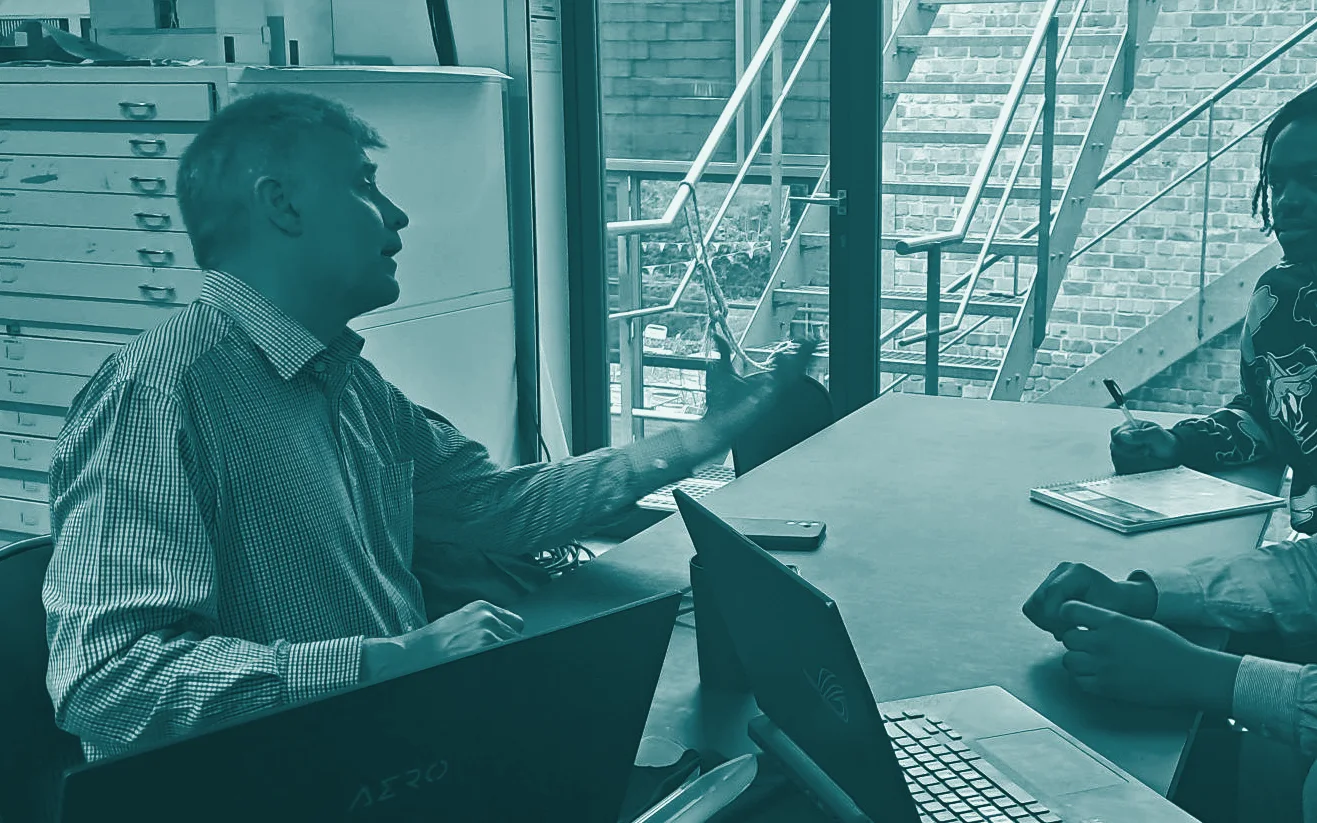
He was instrumental in structuring a 50 M€ automatic warehouse project that had been derailing… empathic while firm.